 Treatment with Kimberly Burnham, PhD (Integrative Medicine), Integrative Manual Therapy, Certified. Call or Email for appointments in Spokane, Washington, Richland, Washington, and Eastern Washington, or Northern Idaho (Sandpoint) Appointments also available in Portland (Southwest), Oregon. Call for appointments 860-221-8510 At Sage Center 10700 SW Beaverton Hillsdale Hwy, Bldg 3, Suite 560 Beaverton OR 97005. Across the parking lot from the Lamp store, near Uwajimaya (Japanese food store). Future Dates Sept 22-24, 28-30 Oct 8-9, 12-15 Nov 10-12, 16-18 Dec 1-3, 7-10 Occasionally, I work in Provo, Utah. I also travel internationally to Canada, Europe, Asia for work with individual clients. Free eBook Thursdays https://www.nervewhisperer.solutions/peace-project/category/free-book-thursday Check out the health-related books, poetry and LGBTQ memoir books available as free eBook downloads. They can be downloaded to any device with the kindle app (computer, phone, iPad, etc). Many of the Audiobooks are available for two or three dollars with the eBook download. You do not need kindle unlimited or an Audible subscription for the free download eBooks or to purchase the Audiobook. Someone from our self-care email list is chosen every month for a free 40 minute health consultation with Kimberly Burnham, PhD (Integrative Medicine) Let us know why you want to learn self-care techniques for a chance to win. Balancing the Eight Diaphragms, a 10-15 minute Self-Care Visualization https://www.nervewhisperer.solutions/peace-project/category/self-care-exercises an excerpt from The Hypermobility-Hypomobility Continuum: Manual Therapy and Alternative Medicine Solutions for Ehlers Danlos Syndrome and Other Connective Tissue Disorders https://amzn.to/4m4wqI3 August 28, 2025 Free Download Using Traditional Chinese Medicine as Self-Care Presentation at Good Health Physical Therapy in Portland, Oregon 
* Brain Health Parkinson's Disease Self-Care Benefits of Motor Imagery Presentation Benefits of Proprioception Exercises Presentation * Connective Tissue Exercises Ehlers-Danlos https://www.nervewhisperer.solutions/ehlersdanlossolutions.html
1 Comment
Parkinson's Alternatives: Walk Better, Sleep Deeper and Move Consciously; Solutions from Nature's Sensational Medicine https://amzn.to/4tN0Fpw Free Download on May 28, 2026  Parkinson’s Disease and Complementary and Alternative Medicine A Community Consciousness and Brain Health Essay. Studies from the field of CAM show promising results for people with Parkinson’s disease who use physical / occupational therapy, Integrative Manual Therapy, OMT, Chiropractic. Looking for ways to improve his flexibility, a 35-year-old man found himself researching the Complementary and Alternative Medicine (CAM) options for Parkinson’s disease. A 68-year-old woman, looked for a way to control her tremors and had never reacted well to medications. A 76 year old runner found the Parkinson’s disease (PD) medication worked for his tremors but the restless leg syndrome was getting worse. Another man’s daughter was a massage therapist and always talking to him about nutrition. Each person is looking for a drug-free, surgery-free way to manage their Parkinson’s disease and other symptoms. Each wants to live life to its fullest. A variety of CAM practitioners are looking at the symptoms of Parkinson’s disease and have done studies on the benefits of physical therapy, occupational therapy, chiropractic, osteopathic manual therapy, Integrative Manual Therapy, Qigong, Alexander Technique and music therapy. Last year, an osteopathic pilot study focused on the affect of Neuromuscular Therapy (NMT). They found NMT, a form of massage therapy can improve motor symptoms in PD. They recommended that future studies examine whether the beneficial effects can be sustained past 5 weeks or with less frequent NMT, thus making treatment more affordable. (Svircev, 2005). In a 2002 Journal of the American Osteopathic Association article, Rivera-Martinez found people with Parkinson’s disease had a significantly higher frequency of bilateral occipitoatlantal and occipitomastoid compression. (Rivera-Martinez, 2002). The occipitoatlantal joint is the space between the base of the head and the first vertebrae at the top of the neck. This is the area which covers and protects the midbrain with the substantia nigra (most affected in Parkinson’s) and the basal ganglia (responsible for the coordinating and fine tuning movements). Rivera-Martinez continues, “over subsequent visits and treatments, the frequency of both strain patterns were reduced significantly to levels found in the control group. (Rivera-Martinez, 2002). Three years earlier, Wells found “in the treated (osteopathic manual therapy) group of patients with PD, statistically significant increases were observed in stride length, cadence, and the maximum velocities of upper and lower extremities after treatment. There were no significant differences observed in the control (sham treatment) groups. The data demonstrates that a single session of an OMT protocol has an immediate impact on Parkinsonian gait. Osteopathic manipulation may be an effective physical treatment method in the management of movement deficits in patients with Parkinson’s disease.” (Wells, 1999) Chiropractic care has also shown benefit. In one study, chiropractors discussed a “60-year-old man diagnosed with Parkinson’s disease at age 53 after a twitch developed in his left fifth finger. He later developed rigidity in his left leg, body tremor, slurring of speech, and memory loss, among other findings.” The study concluded, “Upper cervical chiropractic care aided by cervical radiographs and thermal imaging had a successful outcome for a patient with Parkinson’s disease. (Elster, 2000). Physical therapy and occupational therapy studies are also showing positive results and improvement in function. Formisano, et al. noted “it is not easy to assess the role played by physical therapy due to the difficulty of an objective evaluation; our results, however, show an improvement in the functional performance of patients and suggest the usefulness of physical therapy associated with drug therapy in a comprehensive treatment for PD. (Formisano, 1992). A Cochrane study reported on two trials with a positive effect from occupational therapy, “however the improvements were relatively small. (Deane, 2002). In an investigation of the affect of regular Qigong exercise on Parkinson’s symptoms, researchers noted, “Qigong is an exercise therapy based on the principles of Traditional Chinese Medicine. The exercises combine the practice of motion and rest, both guided by mental imagery. The movements or postures are thought to promote an “energy flow” along meridians, that are not related to anatomic structures.” They reported a beneficial affect of Qigong for gait imbalances and joint problems. The Qigong exercises used in their study “can be classified as active physiotherapy using low-energy exercises with sustained movements of limbs, trunk, face and tongue as well as breathing coordination and can be adapted to special needs. Researchers evaluated the outcomes with the Unified Parkinson’s Disease Rating Scale motor part. (Schmitz-Hübsch, 2006). A study on the effects of Integrative Manual Therapy on Parkinson’s disease symptoms found substantial functional improvements with 60 hours of treatment. A 62 year old man diagnosed four years ago with PD made improvements in virtually all assessed categories. Notable gains include a 48.6% improvement in total United Parkinson’s Disease Rating Scores. Another neurologist’s test, the Schwab and England scores changed from 70% to 80% of normal function. The Up & Go Test and 10 Meter Walk showed improvements in walking speed and stride length. Lung capacity readings (a spirometer measurement) improved from 2800 cc to 3300 cc. The PDQ-39 subjective questionnaire showed a 67% improvement in symptoms. The Medical Symptoms Questionnaire (MSQ) score improved 51.3%. The McGill Pain Questionnaire showed a 73.3% decrease in pain, primarily back and hip pain. (Burnham, 2006). These changes are significant given the medical systems expected 3.1% annual increase in the UPDRS motor scores and a 3.2% decline in Hoehn and Yahr staging levels. (Alves, 2005). In a systematic review researchers found four clinical trials of Alexander technique (AT), a process of psychophysical re-education, which met their inclusion/exclusion criteria. The studies results are promising and imply that AT is effective in reducing the disability of patients suffering from Parkinson’s disease and in improving pain behavior and disability in patients with back pain. (Ernst, 2003). One of the randomized controlled clinical trials looked at 93 people with PD and compared Alexander technique to massage therapy and no additional intervention. “The Alexander Technique group improved compared with the no additional intervention group. The Alexander Technique group was also comparatively less depressed post-intervention on the Beck Depression Inventory, and at six-month follow-up had improved on the Attitudes to Self Scale.” Researchers concluded, “There is evidence that lessons in the Alexander Technique are likely to lead to sustained benefit for people with Parkinson’s disease.” (Stallibrass, C., P. Sissons, et al. (2002). TEN MILLION
Are you one of the ten million people worldwide living with Parkinson's disease? Is someone you love losing their independence or their ability to walk due to Parkinson's disease? Possibly you have found success in medications and surgery. Perhaps you are looking for other ways to decrease the tremors in your hands, so you can enjoy a dinner out with friends. Maybe you want to improve your walking or are a lifelong runner who has had to give up exercise because of the stiffness in your legs and the pain in your back. Maybe you want to read this book to learn some easy ways to balance your brain chemistry and feel more expressive, more focused, and more successful. ACUPUNCTURE, REIKI, CRANIOSACRAL THERAPY Have you tried acupuncture for the symptoms of Parkinson's disease? Have you been thinking about how Craniosacral therapy, Integrative Manual Therapy or Reiki could improve your life? MATRIX ENERGETICS or EMOTIONAL FREEDOM TECHNIQUE (EFT) Maybe someone has talked to you about the benefits of Matrix Energetics, Emotional Freedom Technique's light tapping or Nature's Sensational Medicine. Perhaps you have never even heard of any of these things but your are searching for something that will help you feel better and are open to something new. OLD DOG? There is a saying, "You can't teach an old dog new tricks," but do you know the second part of the saying? "The fastest way to become an old dog? .... Stop learning new tricks." CRAZY EXERCISES? Yes, some of these exercises can seem crazy but before you decide, spend two minutes doing one of the many exercises, visualizations, movements. Spend some time looking at the colors around you or reading the research from ancient Traditional Chinese Medicine or the latest article from Amy Cuddy, a Harvard professor who has found that two minutes of "Power Posing" or standing in a Wonder Woman or Superman posture can improve testosterone levels, literally making you a more powerful leader. Striking a two minute pose, standing or moving in a particular way also decreases cortisol levels, which makes you more adaptable and less stressed. Read the research linking dopamine to the energy of your gallbladder, even if it has been removed. In Acupuncture the gallbladder meridian is associated with the color green. It is, along with the liver a Wood Element. What if visualizing the color green flowing through your body, through your brain, through your liver and gallbladder could improve your control of movement, walking, or your facial expressions? Would it be worth spending two minutes a day? What if visualizing yourself moving in a smooth controlled conscious way could help you in the real world to drive more safely, walk without falling and enjoy your family more. Read the research on motor imagery, on using the mind to heal the brain, on the response of dopamine to physical exercises as well as imaginative rehabilitation. IMAGINATION Imagination is being able to see something before it is visible before it is real in your life. Would your life improve if you were more confident and compassionate or less angry and disappointed? What would change in the here and now if you could imagine a future with a full and independent life? DISGUST EXERCISES What if spending a few minutes a day thinking about disgusting food could improve your basal ganglia function. The basal ganglia is the part of the brain where surgically the deep brain stimulator is placed to suppress unwanted movements like ticks and tremors. What if your emotions could flow along the pathways that also light up the basal ganglia, making it possible for you to stand up, walk and turn as you navigate your world with more ease? WHAT WOULD YOU DO TO FEEL BETTER? What do you have to let go of to harness the healing in your own hands and in your own mind? Are you consciously using touch to improve your independence, your movement or your comfort? Read this book for the easy ways to balance your brain chemistry and feel more expressive, more focused, and more successful Look in these pages for other ways to decrease the tremors in your hands, so you can enjoy a dinner out with friends. Improve your walking or get back to exercising by improving the stiffness in your legs and the pain in your back. Easy tips and exercises to use in daily life from the fields of: Craniosacral therapy Integrative Manual Therapy Reiki Matrix Energetics Osteopathic Manual Medicine Emotional Freedom Technique Acupressure / Acupuncture Therapy 5 Elements Theory of Traditional Chinese Medicine Nature's Sensational Medicine "Dopamine plays a central role in the regulation of motivation, salience, cognition, and motor function. Dysregulation of dopaminergic pathways is implicated in a wide range of psychiatric and neurological conditions, most notably schizophrenia and Parkinson’s disease. Contemporary models emphasize that these disorders do not reflect simple excess or deficiency of dopamine, but rather region-specific and circuit-level dysregulation. This paper reviews the functional organization of dopaminergic pathways and their relevance to mental health, including roles in salience attribution, reward prediction, stress response, and cognitive control. In addition, emerging evidence on complementary and integrative approaches, such as physical activity, mindfulness, acupuncture, and thermal interventions is examined in relation to their potential influence on dopaminergic systems. A system level understanding of dopamine may support more nuanced and individualized approaches to mental health care and brain health." Burnham, Kimberly. Dopamine Dysregulation and Mental Health: Integrating Neurobiology and Complementary Approaches. Advanced Journal of Psychological Science & Research (AJPSR). Review Article. 2026; 1(1): 1-5. https://api.scicurepublications.com/uploads/1778220934255.pdf https://www.scicurepublications.com/journals/6979ae82e46f1e24c7519513/current-issue https://akamaiuniversity.academia.edu/KimberlyBurnham
Intention Writing Workshop ... Morphing Goals and Words Into Healing Poetry Step 1: Assess.Your State of Being [Access the Free video class] Step 2: Write 8 health goals, big and small. 1. Enjoy better walking. 2. Have less pain. 3. Have more energy. 4. Stop eating junk food. 5. Sleep better without night terrors. 6. Eliminate tremors. 7. Get rid of shoulder tension. 8. End back pain. Step 3: Rewrite the 8 health goals framed in a positive way. 1. Enjoy better walking. 2. Move comfortably. 3. Benefit from more energy. 4. Eat more vegetables and protein. 5. Sleep restfully and have great dreams. 6. Develop muscle strength and control. 7. Soften and relax my shoulders. 8. Flex and extend my spine with ease. Step 4: Make the goals measurable. Step 5: Pull Out the Verbs Strength enjoy walking move comfortably benefit and eat sleep rest dream develop and control soften and relax flex and extend Step 6: Write 8 health goals using vivid action words and joints or parts of the body doing the action Motion walk enjoy move smile in motion energetically walk dance bicycle gobble colorful vegetables crunch munch down proteins lay quietly dream vigorously achieve momentum orchestrate muscles like a symphony soften lower calm shoulders bend back and forth here and there with ease Step 7: Write 8 goals using sensory words like red, soft, or tingling. Balance and Flexibility walk gently strongly balanced over uneven surfaces smile eyes twinkling in motion walk energetically dance robust bicycle round and round gobble red apples green avocados yellow orange squash a rainbow of vegetables munch down cashews tortillas stir fried shhh quietly sleeping dreaming sunny warm dream delightful blue and green peaceful dreams orchestrate strong muscles demand cooperation bask in the loyalty of muscles following directions shoulders sigh getting out from under the burden tingling with success bend back and forth soft and flexible like green swaying bamboo Step 8: Add something to your "poem" about the mind or brain, what you are thinking as you accomplish your goal. Step 9: Write a poem as if you are describing yourself or another person doing the action. Mind’s Eye Imagery walking balanced taking wide steps sporting a twinkling smile moving energetically dancing robust bicycling round and round circulating dopamine sleeping dreaming delightfully flexing strong muscles demanding cooperation shoulders relaxing tingling with success bending back and forth soft and flexible Step 10: Write goal and a “poem” as if you have accomplished one of your goals. Noticing Changes Last week I started noticing the difference strength balance on uneven surfaces smiling I recall how far I have come motion smooth and easy for me now anything I want abundant energy walks dances and bicycles around me as I move through the world Red apples green avocadoes yellow orange squash a rainbow of vegetables satisfy me as I dream I remember last night's dream vivid colors words swirling movements flowing like silk in dreams and life I am master of my destiny movement walking running even head sitting on neck on shoulders strong flexible bamboo green and healthy better today than yesterday I walk Step 11: Notice what has changed in how you walk. Reevaluate. Walk and feel. How has each step changed? Step 12: Post your final visualization or “poem” to the community board. Declare your vivid vision of the future. Free Class at SkillShare (Video Presentation)
Write (action filled words) poetry for better brain health. This is what the research is saying ... "A growing body of evidence in cognitive science and neuroscience points towards the existence of a deep interconnection between cognition, perception and action. According to this embodied perspective language is grounded in the sensorimotor system and language understanding is based on a mental simulation process. This means that during action words and sentence comprehension the same perception, action, and emotion mechanisms implied during interaction with objects are recruited. Among the neural underpinnings of this simulation process an important role is played by a sensorimotor matching system known as the mirror neuron system. "The first is that the processing of action-related sentences causes the resonance of motor and mirror neurons encoding the corresponding actions. The second is that there exists a varying degree of crosstalk between neuronal populations depending on whether they encode the same motor act, the same effector or the same action-goal. The third is the fact that neuronal populations' internal dynamics, which results from the combination of multiple processes taking place at different time scales, can facilitate or interfere with successive activations of the same or of partially overlapping pools." — Chersi, F., S. Thill, et al. (2010). "Sentence processing: linking language to motor chains." Front Neurorobot 4." 
Found Poetry Poet
Kimberly Burnham "writes" or "finds" poetry collections within the words of other authors of print books, nonfiction, novels, cookbooks, scientific journal articles, etc. Her first found poetry collection, The Adventure of Jewish History, Poems Found Within The Words of Solomon Grayzel's A History of The Jews https://www.amazon.com/dp/B07QK1GSGN is available on Amazon kindle for 99 cents. Please contact her if you are interested in having her create a found poetry collection from your book, Journal Articles or Blogs. What she provides: 1. Marketing material for your website, Amazon page and marketing copy 2. 25 plus poems 3. A review for Amazon of your book (ie) https://www.amazon.com/review/R1AXFBM7PU97ZP 4. Promotion on my website. (ie) https://www.nervewhisperer.solutions/peace/the-adventure-of-jewish-history-found-poems-created-from-solomon-grayzels-a-history-of-the-jews 5. Blog Interview on LinkedIn https://www.linkedin.com/pulse/innitiating-nondual-shaman-kimberly-burnham/ 6. A copy of your original book with the found poems and art work. Cost 1. $125 for found poems and art work created from the pages of your book ($5 per poem if you want more than 25). While you will be able to use all the poems on your website or in your marketing material, the whole collection as an eBook and print book will be on Amazon by Kimberly Burnham.. 2. Three signed copies of your book mailed to Kimberly. Found Poems can be created from: Books (nonfiction, novels, cookbooks, dictionaries) like The Adventure of Jewish History, Poems Found Within The Words of Solomon Grayzel's A History of The Jews https://www.amazon.com/dp/B07QK1GSGN From scientific journal articles: The Art, Science and Language of Colors and Color Vision https://www.nervewhisperer.solutions/peace/the-art-science-and-language-of-colors-and-color-vision Empathy from Nature Neuroscience https://www.humankindjournal.org/contrib_kimberly-burnham/issue-13-kimberly-burnham Found Poems fashioned from quotes and writings of famous people: Virginia Woolf's Peace Poetry, A Found Poem https://www.poemhunter.com/poem/virginia-woolf-s-peace-poetry-a-found-poem/ Einstein's Peace, A Found Poem https://www.poemhunter.com/poem/einstein-s-peace-a-found-poem/ Or in the stories of not so famous people's stories. Mohamed Maine Seed https://spokanefavs.com/safety-dreams-and-peace-of-mind/
"Acupuncture has increasingly been used as an alternative therapy for treatment of Parkinson's disease (PD). However, the efficacy of acupunture for PD still remains unclear. The present study was designed to objectively and safely monitor anti-parkinsonian effects of electroacupuncture (EA) and brain activity in nonhuman primates modeling human PD. Six middle-aged rhesus monkeys were extensively studied by a computerized behavioral testing battery and by pharmacological MRI (phMRI) scans with specific dopaminergic drug stimulations. All animals were evaluated for behavior and phMRI responses under normal, parkinsonian, parkinsonian with EA treatment and parkinsonian after EA treatment conditions. Stable parkinsonian features were observed in all animals prior to entering the EA study and positive responses to levodopa (L-dopa) challenge were also seen in all animals. The results demonstrated that chronic EA treatments could significantly improve the movement speed and the fine motor performance time during the period of EA treatments, and the effectiveness of EA could be detected even 3 months after the EA treatment. The phMRI data revealed that chronic EA treatments could alter neuronal activity in the striatum, primary motor cortex (M1), cingulate gyrus and global pallidus externa (GPe) in the ipsilateral hemisphere to MPTP lesions. As seen in the changes of parkinsonian features, the residual effects of phMRI responses to apomorphine (APO) challenge could also be found in the aforementioned areas.
The results strongly suggest that anti-parkinsonian effects of electroacupuncture (EA) can be objectively assessed, and the method used in the present study could be translated into the human clinic with some minor modifications." - Zhang, R., A. H. Andersen, et al. (2018). "Objectively measuring effects of electro-acupuncture in parkinsonian rhesus monkeys." Brain Res 1678: 12-19. https://www.ncbi.nlm.nih.gov/pubmed/29017909 Step 1: Assess.Your State of Being [Access the Free video class] Step 2: Write 8 health goals, big and small. 1. Enjoy better walking. 2. Have less pain. 3. Have more energy. 4. Stop eating junk food. 5. Sleep better without night terrors. 6. Eliminate tremors. 7. Get rid of shoulder tension. 8. End back pain. Step 3: Rewrite the 8 health goals framed in a positive way. 1. Enjoy better walking. 2. Move comfortably. 3. Benefit from more energy. 4. Eat more vegetables and protein. 5. Sleep restfully and have great dreams. 6. Develop muscle strength and control. 7. Soften and relax my shoulders. 8. Flex and extend my spine with ease. Step 4: Make the goals measurable. Step 5: Pull Out the Verbs Strength enjoy walking move comfortably benefit and eat sleep rest dream develop and control soften and relax flex and extend Step 6: Write 8 health goals using vivid action words and joints or parts of the body doing the action Motion walk enjoy move smile in motion energetically walk dance bicycle gobble colorful vegetables crunch munch down proteins lay quietly dream vigorously achieve momentum orchestrate muscles like a symphony soften lower calm shoulders bend back and forth here and there with ease Step 7: Write 8 goals using sensory words like red, soft, or tingling. Balance and Flexibility walk gently strongly balanced over uneven surfaces smile eyes twinkling in motion walk energetically dance robust bicycle round and round gobble red apples green avocados yellow orange squash a rainbow of vegetables munch down cashews tortillas stir fried shhh quietly sleeping dreaming sunny warm dream delightful blue and green peaceful dreams orchestrate strong muscles demand cooperation bask in the loyalty of muscles following directions shoulders sigh getting out from under the burden tingling with success bend back and forth soft and flexible like green swaying bamboo Step 8: Add something to your "poem" about the mind or brain, what you are thinking as you accomplish your goal. Step 9: Write a poem as if you are describing yourself or another person doing the action. Mind’s Eye Imagery walking balanced taking wide steps sporting a twinkling smile moving energetically dancing robust bicycling round and round circulating dopamine sleeping dreaming delightfully flexing strong muscles demanding cooperation shoulders relaxing tingling with success bending back and forth soft and flexible Step 10: Write goal and a “poem” as if you have accomplished one of your goals. Noticing Changes Last week I started noticing the difference strength balance on uneven surfaces smiling I recall how far I have come motion smooth and easy for me now anything I want abundant energy walks dances and bicycles around me as I move through the world Red apples green avocadoes yellow orange squash a rainbow of vegetables satisfy me as I dream I remember last night's dream vivid colors words swirling movements flowing like silk in dreams and life I am master of my destiny movement walking running even head sitting on neck on shoulders strong flexible bamboo green and healthy better today than yesterday I walk Step 11: Notice what has changed in how you walk. Reevaluate. Walk and feel. How has each step changed? Step 12: Post your final visualization or “poem” to the community board. Declare your vivid vision of the future. Free Class at SkillShare (Video Presentation) 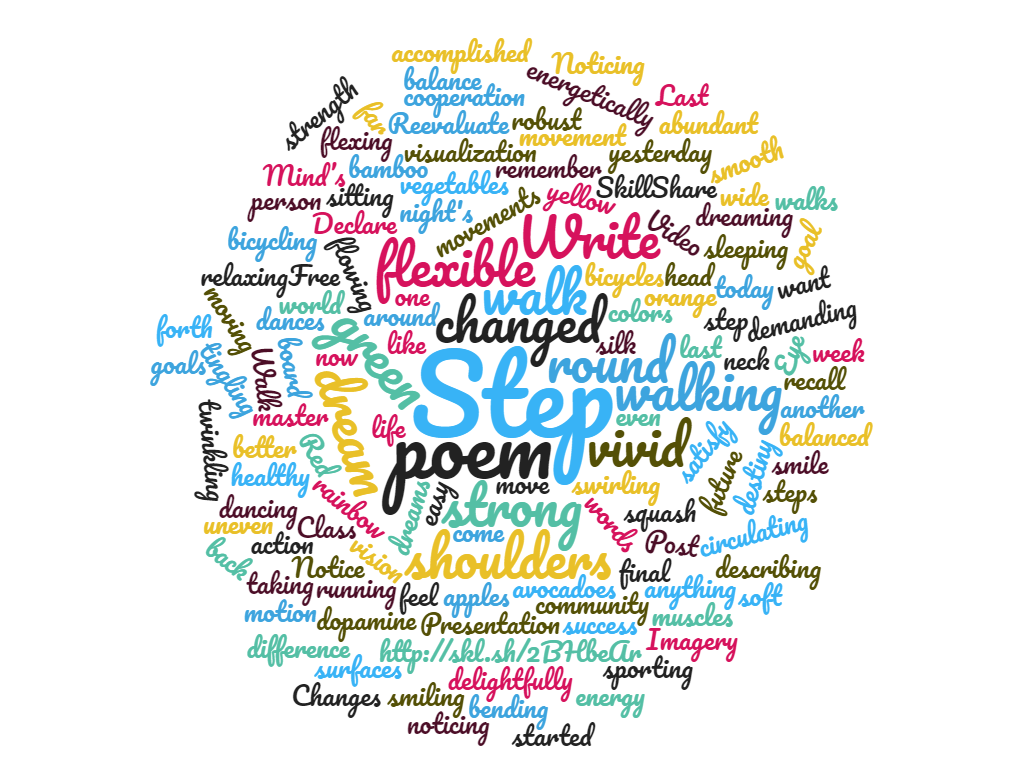 
Conference Speaker on Health (LinkedIn SlideShare)
Raising Consciousness Now Conference on Vision Solutions http://www.youtube.com/watch?v=JhG3-qwkvVk Creating Calm Network Program on Sensational Medicine: Using our Senses http://www.youtube.com/watch?v=Rgt8hMYnLeA Ultimate Life Conference on Sleep Solutions, Jet Lag and Circadian Rhythms http://www.youtube.com/watch?v=fTcsnytBTts
Kimeteiru poem by Kimberly Burnham, PhD, The Nerve Whisperer, Creating Calm Network @KimberlyBurnham
http://www.slideshare.net/KimberlyBurnham/kimeteiru-poem-by-kimberly-burnham-ph-d-the-nerve-whisperer-creating-calm-network-ann-white Tweet Integrative Manual Therapy & Parkinson's Disease Symptoms, Dopamine, Alternatives @KimberlyBurnham http://www.slideshare.net/KimberlyBurnham/integrative-manual-therapy-parkinsons-disease-symptoms-dopamine-alternatives-2006-dissertation-summary-kimberly-burnham-phdpdf Tweet NeuroAnatomy Resource List for Manual Therapists, Kimberly Burnham, PhD NerveWhisperer @KimberlyBurnham http://www.slideshare.net/KimberlyBurnham/neuroanatomy-resource-list-for-manual-therapists-kimberly-burnham-phd-nervewhisperergmail Tweet Red, White, Blue and Yellow - Sage USA Older LGBT Story Contest Winner Kimberly Burnham @KimberlyBurnham http://www.slideshare.net/KimberlyBurnham/2013-10-01-red-sage-usa-lgbt-story-contest-winner-kimberly-burnham-phd-writer-author-publisher-poet-bicyclist Tweet Regain Your Balance Huntingtons Cerebellar Ataxia Spinal Cord Injury @KimberlyBurnham http://www.slideshare.net/KimberlyBurnham/regain-your-balance-huntingtons-cerebellar-ataxia-spinal-cord-injury-unsteady-walking-falling-friedreichs-inherited-balance Tweet Kimberly Burnham, Ph D The Nerve Whisperer Sept 2011 by @KimberlyBurnham #brendonburchard http://www.slideshare.net/KimberlyBurnham/kimberly-burnham-ph-d-the-nerve-whisperer-sept-2011 via @SlideShare Tweet Soft Tissue Joint Comfort Range Solutions Tbr Fibromyalgia Chronic Pain by @KimberlyBurnham http://www.slideshare.net/KimberlyBurnham/soft-tissue-joint-comfort-range-solutions-tbr-fibromyalgia-chronic-pain via @SlideShare Tweet Kimberly Burnham, PhD Resume Aug 2010 by @KimberlyBurnham #matrixenergeticscertifiedhealthcoach http://www.slideshare.net/KimberlyBurnham/kimberly-burnham-ph-d-resume-aug-2010 Tweet
Circadian rhythms influence many physiologic processes, behaviors, and emotions. They influence our sleep patterns and disruption can aggravate symptoms of Parkinson's disease, blood pressure, brain injuries and other physical issues. Circadian rhythms can be disrupted by constant light exposure.
This article will look at different health issues that are aggravated by light and circadian rhythm disruption as well as statistics on light pollution. There are several exercises readers can do that help to reset or balance circadian rhythms. Here is an example of some of the recent medical research included in the article. Li, D., S. Ma, et al. (2016). "Environmental Circadian Disruption Worsens Neurologic Impairment and Inhibits Hippocampal Neurogenesis in Adult Rats After Traumatic Brain Injury." Cell Mol Neurobiol. Circadian rhythms modulate many physiologic processes and behaviors. Therefore, their disruption causes a variety of potential adverse effects in humans and animals. Circadian disruption induced by constant light exposure has been discovered to produce pathophysiologic consequences after brain injury. However, the underlying mechanisms that lead to more severe impairment and disruption of neurophysiologic processes are not well understood. Here, we evaluated the effect of constant light exposure on the neurobehavioral impairment and survival of neurons in rats after traumatic brain injury (TBI).
Free Radio Tips for People with a diagnosis of Parkinson's ... Listen to Using Sensational Medicine to Improve Parkinson's Symptoms @ http://www.blogtalkradio.com/parkinsons-recovery/2013/06/04/using-sensational-medicine-to-improve-parkinsons-symptoms
Kimberly Burnham, PhD and Robert Rodgers, PhD Talk on Pioneers of Parkinson's Recovery Radio. Outline of the show: What is your background in regards to Parkinson's? My Father's Brother had Parkinson's. I have a PhD in Integrative Medicine. My dissertation focused on using Manual Therapy / Alternative Medicine to relieve the symptoms of Parkinson's disease. Now you are talking about something called Sensational Medicine. What is that? Can you give some concrete examples? Amy Cuddy Wonder Woman posture, cortisol and testosterone. Caring Creativity and the Frontal Lobe. Disgust Exercises and the Basal Ganglia. Bicycling and Parkinson's (Kimberly bicycles 3000 miles as part of Hazon's Cross USA ride (Seattle to Washington DC in support of sustainable agriculture, food justice and the environment.). What exercise would you recommend for balancing Dopamine levels? Consciouly Long Striding. or Long Walking. Does a person have to do the exercise? What if they can't? Visualizations from my book, Parkinson's Disease? Walk Better, Sleep Deeper and Move Consciously, Solutions from Nature's Sensational Medicine Any other things listeners can do at home? Green Gallbladder Meridian visualization; Emotional Freedom Technique (EFT) to the side of the eye, Tree visualization. Are there any foods that are helpful? Cashews (high in iron, a precursor to dopamine), good fats, protein. Nut preparation from the book Nourishing Traditions ... and more. Een Weg Zal Beschouwen de Integratieve Handtherapie Integratieve Handtherapie (IMT) is een hand-op benadering naar genezing en herstel van een variatie van voorwaarde. Een aspect van IMT is de palpation en normalisatie van motiliteit of ritmes in het lichaam. Deze ritmes zijn reflecterend van fysiologie (hoe het lichaam) of pathophysiology (ziekte of storing van lichaamsfunctie) functioneert. Met betrekking tot een hartaanval zal een weg CPR is beschrijven: druk in een specifieke locatie om een normaal ritme in het lichaam te verbeteren. IMT behandelen Therapeuten vele ritmes in het lichaam. Het werk kan beschreven worden als gebruiken nauwkeurige druk in specifieke locaties om de ritmes en de fysiologie te normaliseren en bij te dragen naar verbeterde gezondheid en kwaliteit van leven. Ooit vragen mensen, hoe u kan voelen deze verschillende motiliteit of circadiaanse ritmes? Het is niet verschillende de wijn kenner die kan proeven een glas van wijn en de soort van druiven vertel, waar zij werden gegroeid, de flessenmaatschappij en het jaar. Wat doen zij? Zij nemen zintuigelijke informatie, smaak en geur en vertalen hem in iets anders: een datum, locatie of een wijnmakerij. In IMT neemt de therapeut zintuigelijke informatie: aanraking, uitzicht en meer en vertaalt hem in iets anders, een weefsel type, een leeftijd en een soort storing. De therapeut zou kunnen zeggen dat er een benen kneuzing in de dij of een samendrukking in het voorafgaande kruisvormige ligament van de juiste knie is. Indien de klant een DHR. had, zal het waarschijnlijke vertoning de benen kneuzing of het beschadigen ligament, maar is het de moeite lonend voor de klant om invallende medische tests te hebben te bevestigen wat de therapeut zegt? Voornamelijk geen bijgevolg hoe de klant weet of de therapeut correct is? Zij voelen, functie en kijken goeder en doen op die plaats hem echt is van belang of de theoretische basis voor IMT nauwkeurig is of niet? Nog een weg zal IMT is bekijken als een biomechanisme benadering waar therapeuten druk in specifieke wegen gebruiken om het weefsel en gewricht oppervlakten verplaatsen te helpen, decomprimeer en wikkel af en staat voor meer ruimte en betere beweging toe. Wanneer de spanning op bloedvaten, zenuwen en ander weefsel is, vloeistof vrijgegeven en informatie vloeit goeder en vergemakkelijkt herstel. IMT Therapeuten ook gebruik wijst reactie naar bespoedig genezing. Er zijn vele verschillende systemen dat gebruik reactie punt, inclusief acupunctuur, shiatsu, reflexologie en de punt van Marskramer. IMT therapeuten gebruiken reflectorische punt die reflecterend van ruggenmerg vlakke reacties zijn, brainstem vlakke reacties evenals reactie punt beschouwden door de hypothalamus, autonome zenuwachtige systeem en corticale delen van het brein beïnvloed te worden. Deze punt worden gecontacteerd een verandering in de druk en spanningen in het weefsel te creëren. De meeste mensen zouden, is de pijnlijke heup kunnen zeggen welke toen zij een man met echt slechte heup pijn gang keken. Zij kunnen misschien niet articuleren dat het geluid van zijn voet val zwaarer op het recht is of dat hij grimassen een beetje als hij aan de linkerkant voet landt of dat zijn knie niet helemaal of zijn schouder dipsauzen een beetje meer op de pijnlijke zijde verlengt. Een persoon met linkerheup pijn gang anders van iemand met juiste heup pijn. De meeste mensen kunnen het verschil zien, maar nemen nog steeds de informatie onbewust op. De IMT therapeut maakt meer van dit informatie bewuste en kan articuleren meer waarvan zij waarnemen. Een persoon met een benen kneuzing in hun juiste dij leugens op de tafel anders van iemand met een verstoring van vlies in hun dijslagader. De informatie is daar voor iemand te zien, maar het neemt gewoonlijk sommige trainingen en beoefent deze informatie op te nemen, maak hem bewust en kan articuleren wat u ziet. Als Arthur C. Clark hem zet, "Enig voldoende gevorderde technologie is ononderscheidbaar van magie". Integratieve Handtherapie is technologie vooruitgegaan. Kimberly Burnham
Kimberly Burnham, PhD, is a writer, poet, educator, and complementary medicine practitioner with more than forty years of experience in manual and integrative therapies. Her training began in Japan in 1983 with shiatsu and Five Element acupressure. She graduated from the 2,200-hour massage therapy program at the Sutherland-Chan School of Massage Therapy in Toronto in 1993 and completed the five-year program at the Canadian College of Osteopathy in 2001. She later earned a PhD in Integrative Medicine, focusing on manual therapy, complementary approaches, and brain health coaching for people with Parkinson’s disease. Burnham trained extensively in Integrative Manual Therapy with Sharon W. Giammatteo, PT, PhD, and studied and taught more than fifty courses through the Connecticut School of Integrative Manual Therapy. Her additional training includes Upledger Institute classes in CranioSacral Therapy, Visceral Manipulation, Myofascial Release, Strain Counterstrain, Process Acupressure, Mechanical Link, as well as Matrix Energetics, Reiki, nutrition, clinical herbal medicine, homotoxicology, aromatherapy, hypnotherapy, and music therapy. Her clinical and educational work focuses particularly on the brain, spinal cord, vision, nervous system, and connective tissue. She has worked with people experiencing Parkinson’s disease, multiple sclerosis, neuropathy, chronic back pain, seizure disorders, autism, Down syndrome, Ehlers-Danlos syndrome, tethered cord, and a variety of visual and neurological challenges. Published in more than 100 books and anthologies, Burnham is the author of Awakenings: Peace Dictionary, Language and the Mind, a Daily Brain Health Program, which explores ways to support clarity, creativity, movement, and brain health. https://amzn.to/4gIGlQA An award-winning poet, she writes regularly for The Year of the Poet and Inner Child Press and contributes to numerous anthologies. https://amzn.to/3U1oudJ She also co-owns Creating Calm Network Publishing Group, a small independent publishing house that helps writers bring memoirs, novels, poetry, nonfiction, family histories, cookbooks, and other projects into print. Her forthcoming book, Palpating Chemistry, draws on more than four decades of clinical experience to explore what practitioners may be perceiving through their hands and how anatomy, physiology, chemistry, sensory awareness, visualization, and complementary medicine intersect in the therapeutic encounter. Burnham’s work is guided by three central ideas: What if symptoms reflect the body’s attempt to protect, adapt, or survive—and how might we help that process become more successful? “Where the mind goes, energy follows; where energy goes, blood follows.” And, as the Japanese saying reminds us, “There are many ways to the top of Mount Fuji.” Her work encourages curiosity about the many possible paths toward greater health and well-being. Outside of her clinical and writing work, Burnham is an avid gardener and environmentalist. In 2013, she bicycled more than 3,000 miles across the United States during a nine-week ride with Hazon, a Jewish environmental organization. She works with clients in Washington, Oregon, Idaho, Utah and throughout the world. Una Manera de Considerar la Terapia Manual Integradora
la Terapia Manual Integradora (IMT) es un enfoque práctico a la curación y la recuperación de una variedad de condiciones. Un aspecto de IMT es el palpation y la normalización de motilidades o ritmos en el cuerpo. Estos ritmos son reflectores de la fisiología (cómo el cuerpo funciona) o pathophysiology (la enfermedad o la disfunción de funciones de cuerpo.) En el caso de un infarto, de un solo sentido para describir resucitación cardiopulmonar es: la presión en una ubicación específica mejorar un ritmo normal en el cuerpo. Los Terapeutas de IMT tratan muchos ritmos en el cuerpo. El trabajo se puede describir utilizando como la presión precisa en ubicaciones específicas para normalizar los ritmos y la fisiología, contribuyendo a la salud y la calidad mejoradas de la vida. ¿Alguna vez personas preguntan, cómo puede sentirse usted estas motilidades diferentes o los ritmos circadianos? No está a diferencia del enólogo que puede probar un vidrio de vino y decir la clase de uvas, donde ellos fueron crecidos, la embotelladora y el año. ¿Qué hacen ellos? Ellos toman información sensoria, el sabor y el olor y lo traduciendo en algo más: una fecha, la ubicación, o un lagar. En IMT, el terapeuta toma información sensoria: el toque, la vista y más y lo traduce en algo más, un de tipo tejido, una edad, y un tipo de disfunción. El terapeuta puede decir hay una magulladura de hueso en el muslo o una compresión en el ligamento anterior de cruciate del rodilla derecho. ¿Si el cliente tuvo un MRI, hace la exposición probable la magulladura de hueso o el ligamento dañado, pero vale la pena para el cliente de tener las pruebas médicas invasivas para confirmar lo que el terapeuta dice? ¿En su mayor parte no, así que cómo sabe el cliente si el terapeuta es correcto? ¿Ellos se sienten, la función y parecen mejor y en ese punto, importa realmente si la base teórica para IMT no es exacta ni? Otra manera de ver IMT es como un enfoque biomecánico donde usos de terapeutas presionan en maneras específicas ayudar las superficies del tejido y la coyuntura cambian, descomprimen y desenroscan, teniendo en cuenta más espacio y mejor movimiento. Cuándo la tensión en vasos sanguíneos, los nervios y otro tejido se liberan, el líquido y la información fluyen mejor y facilitan la recuperación. Los Terapeutas de IMT también puntos de reflejo de uso para facilitar la curación. Hay muchos sistemas diferentes que los puntos del reflejo del uso, inclusive acupuntura, el shiatzu, los puntos de la reflexología y Chapman. Los terapeutas de IMT utilizan los puntos del reflejo que son reflectores de la médula espinal los reflejos planos, el nivel de brainstem refleja así como refleja los puntos considerados para ser influidos por el hipotálamo, sistema nervioso autonómico y partes corticales del cerebro. Estos puntos se contactan para crear un cambio en las presiones y tensiones en el tejido. La mayoría de las personas serían capaces de decir que es la cadera dolorosa como ellos miraron a un hombre con la caminata realmente mala del dolor de cadera. Ellos no quizás sean capaces de articular que el sonido de su caída de pie está más pesado en el derecho ni que él hace una mueca levemente como él aterriza en el pie izquierdo o que la rodilla no extiende completamente o el hombro moja levemente más en el lado doloroso. Una persona con dejó las caminatas del dolor de cadera diferentemente de alguien con el dolor del cadera derecho. La mayoría de las personas pueden ver la diferencia, pero recogen todavía la información inconscientemente. El terapeuta de IMT hace más de esta información consciente y es capaz de articular más de lo que ellos perciben. Una persona con una magulladura de hueso en su fémur correcto miente sobre la mesa diferentemente de alguien con una interrupción de membrana en la arteria femoral. La información está allí para cualquiera ver, pero toma generalmente alguna instrucción y la práctica para recoger esta información, hacerlo consciente y ser capaz de articular lo que usted ve. Cuando Arthur C. Clark lo puso, "Cualquier tecnología suficientemente avanzada es indistinguible de la magia." La Terapia Manual integradora se avanza la tecnología. Um Meio De Considerar Integrative Manual de Terapia Integrative Terapia Manual (IMT) é uma aproximação de mãos-em a cura e para recuperação de uma variedade de condições. Um aspecto de IMT é o palpation e normalization de motilities ou ritmos no corpo. Estes ritmos estão pensativos de fisiologia (como o corpo funciona) ou pathophysiology (doença ou dysfunction de funções de corpo.) No caso de um ataque cardíaco, um meio de descrever CPR é: pressão numa situação específica melhorar um ritmo normal no corpo. Os Terapeutas de IMT tratam muitos ritmos no corpo. O trabalho pode ser descrito como usando pressão precisa em situações específicas a normalize para os ritmos e a fisiologia, contribuindo a saúde melhorada e para qualidade de vida. Alguma vez as pessoas pedem, como pode sentir-se estes motilities diferente ou ritmos de circadian? Não é não como o conhecedor de vinho que pode provar um vidro de vinho e conta o tipo de uvas, onde eles foram crescidos, o bottler e o ano. O que eles fazem? Tomam informação sensória, gosto e aroma e traduzindo em algo mais: uma data, situação, ou um winery. Em IMT, o terapeuta toma informação sensória: toque, visão e mais e traduz em algo mais, um tipo de tecido, uma idade, e um tipo de dysfunction. O terapeuta pode dizer há um machucado de osso na coxa ou uma compressão no ligamento anterior de cruciate do joelho direito. Se o cliente terivesse um MRI, ria exposição possível o machucado de osso ou o ligamento estragado, mas é vantajoso para o cliente ter provas médicas invasoras confirmar o que o terapeuta diz? Principalmente, tão como não faz o cliente saber se o terapeuta é correto? Sentem-se, função e parece melhor e nesse ponto, realmente importa se a base teórica para IMT é exata ou não? Outro meio de ver IMT é como uma aproximação de biomechanical onde usos de terapeutas pressionam em meios específicos ajudar o tecido e superfícies em conjunto mudam, decompress e desenrola, permitindo para mais espaço e melhor movimento. Quando a tensão em vasos sangüíneos, nervos e outro tecido é liberado, fluido e fluxos de informação melhor e facilita recuperação. Os Terapeutas de IMT também pontos de reflexo de uso expedir cura. Há muitos sistemas diferentes que usam pontos de reflexo, incluindo acupuntura, shiatsu, reflexology e pontos do Chapman. Os terapeutas de IMT usam pontos de reflexo que estão pensativo de espinha dorsal reflexos planos, brainstem reflexos planos assim como pontos de reflexo consideraram para ser influenciados pelo hypothalamus, sistema nervoso autônomo e partes de cortical do cérebro. Estes pontos são contatado para criar uma mudança nas pressões e tensões no tecido. A maioria de pessoas seriam capazes de contar que é o quadril doloroso como observaram um homem com passeio realmente mau de dor de quadril. Eles talvez não sejam capazes de articular que o som da sua queda de pé é mais pesado no direito nem que faz caretas levemente como aterrissa no pé esquerdo nem que o seu joelho plenamente não estende nem seus mergulhos de ombro levemente mais no lado doloroso. Uma pessoa com passeios esquerdos de dor de quadril de forma diferente de alguém com dor de quadril direito. A maioria de pessoas podem ver a diferença, mas ainda colhem a informação inconscientemente. O terapeuta de IMT faz mais desta informação ciente e é capaz de articular mais de ele que eles percebem. Uma pessoa com um machucado de osso em suas mentiras corretas de femur na tabela de forma diferente de alguém com uma perturbação de membrana em sua artéria de femoral. A informação está aí para qualquer um ver, mas normalmente toma algum treinamento e prática colher esta informação, fá-lo ciente e é capaz de articular o que você vê. Como Arthur C. O Clark põe-o, "Qualquer tecnologia suficientemente avançada é indistinguível de magia." O Integrative Terapia Manual é avançada a tecnologia. Kimberly Burnham
Kimberly Burnham, PhD, is a writer, poet, educator, and complementary medicine practitioner with more than forty years of experience in manual and integrative therapies. Her training began in Japan in 1983 with shiatsu and Five Element acupressure. She graduated from the 2,200-hour massage therapy program at the Sutherland-Chan School of Massage Therapy in Toronto in 1993 and completed the five-year program at the Canadian College of Osteopathy in 2001. She later earned a PhD in Integrative Medicine, focusing on manual therapy, complementary approaches, and brain health coaching for people with Parkinson’s disease. Burnham trained extensively in Integrative Manual Therapy with Sharon W. Giammatteo, PT, PhD, and studied and taught more than fifty courses through the Connecticut School of Integrative Manual Therapy. Her additional training includes Upledger Institute classes in CranioSacral Therapy, Visceral Manipulation, Myofascial Release, Strain Counterstrain, Process Acupressure, Mechanical Link, as well as Matrix Energetics, Reiki, nutrition, clinical herbal medicine, homotoxicology, aromatherapy, hypnotherapy, and music therapy. Her clinical and educational work focuses particularly on the brain, spinal cord, vision, nervous system, and connective tissue. She has worked with people experiencing Parkinson’s disease, multiple sclerosis, neuropathy, chronic back pain, seizure disorders, autism, Down syndrome, Ehlers-Danlos syndrome, tethered cord, and a variety of visual and neurological challenges. Published in more than 100 books and anthologies, Burnham is the author of Awakenings: Peace Dictionary, Language and the Mind, a Daily Brain Health Program, which explores ways to support clarity, creativity, movement, and brain health. https://amzn.to/4gIGlQA An award-winning poet, she writes regularly for The Year of the Poet and Inner Child Press and contributes to numerous anthologies. https://amzn.to/3U1oudJ She also co-owns Creating Calm Network Publishing Group, a small independent publishing house that helps writers bring memoirs, novels, poetry, nonfiction, family histories, cookbooks, and other projects into print. Her forthcoming book, Palpating Chemistry, draws on more than four decades of clinical experience to explore what practitioners may be perceiving through their hands and how anatomy, physiology, chemistry, sensory awareness, visualization, and complementary medicine intersect in the therapeutic encounter. Burnham’s work is guided by three central ideas: What if symptoms reflect the body’s attempt to protect, adapt, or survive—and how might we help that process become more successful? “Where the mind goes, energy follows; where energy goes, blood follows.” And, as the Japanese saying reminds us, “There are many ways to the top of Mount Fuji.” Her work encourages curiosity about the many possible paths toward greater health and well-being. Outside of her clinical and writing work, Burnham is an avid gardener and environmentalist. In 2013, she bicycled more than 3,000 miles across the United States during a nine-week ride with Hazon, a Jewish environmental organization. She works with clients in Washington, Oregon, Idaho, Utah and throughout the world. דרך להתבונן בטיפול ידני אינטגרטיבי טיפול ידני אינטגרטיבי (Integrative Manual Therapy – IMT) הוא גישה טיפולית המבוססת על מגע ידיים, שמטרתה לתמוך בריפוי ובהחלמה ממגוון מצבים. אחד ההיבטים של IMT הוא מישוש ונרמול של תנועתיות או מקצבים בגוף. מקצבים אלה משקפים את הפיזיולוגיה – האופן שבו הגוף מתפקד – או את הפתופיזיולוגיה – מחלה או הפרעה בתפקודי הגוף. במקרה של התקף לב, אחת הדרכים לתאר החייאה לבבית־ריאתית (CPR) היא: הפעלת לחץ במקום מסוים כדי לסייע בשיקום מקצב תקין בגוף. מטפלי IMT עובדים עם מקצבים רבים בגוף. ניתן לתאר את עבודתם כשימוש בלחץ מדויק במיקומים מסוימים כדי לנרמל את המקצבים ואת הפיזיולוגיה, ובכך לתרום לשיפור הבריאות ואיכות החיים. לעיתים אנשים שואלים: כיצד אפשר להרגיש את סוגי התנועתיות השונים האלה או מקצבים יממתיים? הדבר אינו שונה לחלוטין מאנין יין שטועם כוס יין ויכול לזהות את סוג הענבים, היכן הם גודלו, מי ביקבק את היין ובאיזו שנה הוא הופק. מה בעצם עושה אותו אדם? הוא קולט מידע חושי – טעם וריח – ומתרגם אותו למשהו אחר: לתאריך, למקום או ליקב. ב-IMT, המטפל קולט מידע חושי – מגע, ראייה ועוד – ומתרגם אותו למידע אחר, כגון סוג הרקמה, גיל הפגיעה וסוג ההפרעה בתפקוד. מטפל עשוי לומר שיש חבלה בעצם באזור הירך או דחיסה ברצועה הצולבת הקדמית של הברך הימנית. אילו המטופל היה עובר בדיקת MRI, ייתכן שהבדיקה הייתה מראה את החבלה בעצם או את הפגיעה ברצועה. אך האם כדאי למטופל לעבור בדיקות רפואיות פולשניות רק כדי לאשר את מה שהמטפל אומר? ברוב המקרים לא. אם כך, כיצד המטופל יודע אם המטפל צדק? הוא מרגיש טוב יותר, מתפקד טוב יותר ונראה טוב יותר. ובשלב הזה עולה השאלה: האם באמת משנה אם הבסיס התיאורטי של IMT מדויק לחלוטין או לא? דרך נוספת להבין את IMT היא כגישה ביו־מכנית, שבה מטפלים משתמשים בלחץ בדרכים מסוימות כדי לעזור לרקמות ולמשטחי המפרקים להשתנות, להשתחרר מדחיסה ולהיפרם ממתח, וכך לאפשר יותר מרחב ותנועה טובה יותר. כאשר משתחרר המתח המופעל על כלי דם, עצבים ורקמות אחרות, נוזלים ומידע יכולים לזרום בצורה טובה יותר ולסייע בתהליך ההחלמה. מטפלי IMT משתמשים גם בנקודות רפלקס כדי לזרז את תהליך הריפוי. קיימות מערכות רבות ושונות המשתמשות בנקודות רפלקס, ובהן דיקור סיני, שיאצו, רפלקסולוגיה ונקודות צ'פמן. מטפלי IMT משתמשים בנקודות רפלקס המשקפות רפלקסים ברמת חוט השדרה, רפלקסים ברמת גזע המוח, וכן בנקודות רפלקס הנחשבות למושפעות מן ההיפותלמוס, ממערכת העצבים האוטונומית ומאזורים קורטיקליים של המוח. המטפל נוגע בנקודות אלה כדי ליצור שינוי בלחצים ובמתחים שברקמות. רוב האנשים יוכלו לזהות איזו ירך כואבת כאשר הם צופים באדם הסובל מכאבים חזקים בירך בזמן שהוא הולך. ייתכן שהם לא יוכלו להסביר במילים שקול נחיתת כף הרגל שלו כבד יותר בצד ימין, שהוא מעווה מעט את פניו כאשר הוא נוחת על כף הרגל השמאלית, שהברך שלו אינה מתיישרת לחלוטין, או שהכתף שלו יורדת מעט יותר בצד הכואב. אדם הסובל מכאב בירך השמאלית הולך בצורה שונה מאדם הסובל מכאב בירך הימנית. רוב האנשים מסוגלים לראות את ההבדל, אך קולטים חלק גדול מן המידע הזה באופן לא מודע. מטפל IMT לומד להפוך יותר מן המידע הזה למודע ולהביע במילים חלק גדול יותר ממה שהוא קולט. אדם עם חבלה בעצם הירך הימנית שוכב על מיטת הטיפולים בצורה שונה מאדם שיש לו פגיעה בקרום או במבנה של עורק הירך. המידע נמצא שם וניתן, באופן עקרוני, להבחין בו, אך בדרך כלל נדרשים הכשרה ותרגול כדי ללמוד לקלוט את המידע הזה, להפוך אותו למודע ולהיות מסוגלים לתאר במילים את מה שרואים ומרגישים. כפי שאמר ארתור סי. קלארק: "כל טכנולוגיה מתקדמת דיה אינה ניתנת להבחנה מקסם." טיפול ידני אינטגרטיבי הוא טכנולוגיה מתקדמת. Kimberly Burnham
Kimberly Burnham, PhD, is a writer, poet, educator, and complementary medicine practitioner with more than forty years of experience in manual and integrative therapies. Her training began in Japan in 1983 with shiatsu and Five Element acupressure. She graduated from the 2,200-hour massage therapy program at the Sutherland-Chan School of Massage Therapy in Toronto in 1993 and completed the five-year program at the Canadian College of Osteopathy in 2001. She later earned a PhD in Integrative Medicine, focusing on manual therapy, complementary approaches, and brain health coaching for people with Parkinson’s disease. Burnham trained extensively in Integrative Manual Therapy with Sharon W. Giammatteo, PT, PhD, and studied and taught more than fifty courses through the Connecticut School of Integrative Manual Therapy. Her additional training includes Upledger Institute classes in CranioSacral Therapy, Visceral Manipulation, Myofascial Release, Strain Counterstrain, Process Acupressure, Mechanical Link, as well as Matrix Energetics, Reiki, nutrition, clinical herbal medicine, homotoxicology, aromatherapy, hypnotherapy, and music therapy. Her clinical and educational work focuses particularly on the brain, spinal cord, vision, nervous system, and connective tissue. She has worked with people experiencing Parkinson’s disease, multiple sclerosis, neuropathy, chronic back pain, seizure disorders, autism, Down syndrome, Ehlers-Danlos syndrome, tethered cord, and a variety of visual and neurological challenges. Published in more than 100 books and anthologies, Burnham is the author of Awakenings: Peace Dictionary, Language and the Mind, a Daily Brain Health Program, which explores ways to support clarity, creativity, movement, and brain health. https://amzn.to/4gIGlQA An award-winning poet, she writes regularly for The Year of the Poet and Inner Child Press and contributes to numerous anthologies. https://amzn.to/3U1oudJ She also co-owns Creating Calm Network Publishing Group, a small independent publishing house that helps writers bring memoirs, novels, poetry, nonfiction, family histories, cookbooks, and other projects into print. Her forthcoming book, Palpating Chemistry, draws on more than four decades of clinical experience to explore what practitioners may be perceiving through their hands and how anatomy, physiology, chemistry, sensory awareness, visualization, and complementary medicine intersect in the therapeutic encounter. Burnham’s work is guided by three central ideas: What if symptoms reflect the body’s attempt to protect, adapt, or survive—and how might we help that process become more successful? “Where the mind goes, energy follows; where energy goes, blood follows.” And, as the Japanese saying reminds us, “There are many ways to the top of Mount Fuji.” Her work encourages curiosity about the many possible paths toward greater health and well-being. Outside of her clinical and writing work, Burnham is an avid gardener and environmentalist. In 2013, she bicycled more than 3,000 miles across the United States during a nine-week ride with Hazon, a Jewish environmental organization. She works with clients in Washington, Oregon, Idaho, Utah, Israel and around the world. Une Façon pour Considérer la Thérapie Manuelle Intégrative
Thérapie Manuelle Intégrative (IMT) est une approche manuelle à guérir et le rétablissement d'une assortiment de conditions. Un aspect de IMT est le palpation et la normalisation de motilities ou les rythmes dans le corps. Ces rythmes sont réfléchissants de physiologie (comment le corps fonctionne) ou pathophysiology (la maladie ou le dysfonctionnement de fonctions de corps.) Dans le cas d'un assaut de coeur, à sens unique pour décrire réanimation cardio-pulmonaire est : la pression dans un emplacement spécifique pour améliorer un rythme normal dans le corps. Les Thérapeutes de IMT traitent beaucoup de rythmes dans le corps. Le travail peut être décrit comme utilisant de la pression précise dans les emplacements spécifiques pour normaliser les rythmes et la physiologie, contribuant à la santé et à la qualité améliorées de vie. Un jour les gens demandent, comment pouvez-vous sentir ces motilities différent ou les rythmes circadiens ? Ce n'est pas contrairement au connaisseur de vin qui peut goûter un verre de vin et dit le genre de raisins, où ils ont été grandis, le bottler et l'année. Que font-ils ? Ils prennent l'information sensorielle, le goût et l'odeur et le traduisant dans quelque chose d'autre : une date, un emplacement, ou une entreprise vinicole. Dans IMT, le thérapeute prend l'information sensorielle : la touche, la vue et et le traduit plus dans quelque chose d'autre, un type de tissu, un âge, et un type de dysfonctionnement. Le thérapeute peut dire il y a une contusion d'os dans la cuisse ou une compression dans le ligament de cruciate antérieur du bon genou. Si le client avait un MRI, il ferait le spectacle probable la contusion d'os ou le ligament endommagé, mais c'est de valeur pour le client pour avoir des tests médicaux invasifs pour confirmer que le thérapeute dit ? Surtout non, donc comment le client sait-il si le thérapeute est correct ? Ils se sentent, la fonction et le regard mieux et à ce point, il vraiment a d'importance si la base théorique pour IMT est précis ou pas ? Une autre façon pour regarder IMT est comme une approche de biomécanique où les usages de thérapeutes font pression sur dans les façons spécifiques pour aider les surfaces de tissu et joint changent, décompresse et dérouler, tenant le compte de plus d'espace et mieux le mouvement. Quand la tension sur les vaisseaux sanguins, les nerfs et l'autre tissu est relâchée, les fluxs de liquide et information et facilite mieux le rétablissement. Les Thérapeutes de IMT aussi les points de réflexe d'usage pour expédier guérir. Il y a beaucoup de systèmes différents que les points de réflexe d'usage, y compris l'acupuncture, shiatsu, les points de réflexologie et Chapman. Les thérapeutes de IMT utilisent des points réflexes qui sont réfléchissants de corde vertébrale réflexes égaux, brainstem les réflexes égaux de même que les points de réflexe ont considéré être influencés par l'hypothalamus, le système nerveux autonome et les parties corticales du cerveau. Ces points sont contactés pour créer un changement dans les pressions et les tensions dans le tissu. La plupart des gens pourraient dire qui est l'hanche pénible comme ils ont regardé un homme avec la vraiment mauvaise promenade de douleur d'hanche. Ils ne pourraient pas pouvoir articuler que le son de sa chute de pied est plus lourd sur la droite ou qu'il grimace légèrement comme il atterrit sur le pied gauche ou que son genou ne s'étend pas entièrement ou ses baisses d'épaule légèrement plus sur le côté pénible. Une personne avec les promenades de douleur d'hanche gauches différemment de quelqu'un avec la bonne douleur d'hanche. La plupart des gens peuvent voir la différence, mais sont calme prenant l'information inconsciemment. Le thérapeute de IMT fait plus de cette information consciente et peut articuler plus de ce qu'ils perçoivent. Une personne avec une contusion d'os dans leurs bons mensonges de fémur sur la table différemment de quelqu'un avec une interruption de membrane dans leur artère fémorale. L'information est là-bas pour n'importe qui voir, mais il prend d'habitude de l'entraînement et la pratique pour prendre cette information, le faire conscient et pouvoir articuler que vous voyez. Comme Arthur C. Clark l'a mis, « n'importe quelle technologie suffisamment avancée est indistinguée de la magie. » La Thérapie Manuelle intégrative est avancée la technologie. Ein Weg, Integrative Manuelle Therapie Integrative Manuelle Therapie (IMT) Zu Bedenken, ist ein Hände auf Annäherung zu Heilung und Rückgewinnung von verschiedenen Bedingungen. Ein Aspekt von IMT ist der palpation und die Normalisierung von motilities oder Rhythmen im Körper. Diese Rhythmen sind reflektierend von Physiologie (wie der Körper) oder pathophysiology (Krankheit oder Fehlfunktion der Körperfunktionen) funktioniert. Im Fall von einem Herzinfarkt ist ein Weg, CPR zu beschreiben, : Druck in einem spezifischen Ort, einen normalen Rhythmus im Körper zu verbessern. IMT Therapeuten behandeln viele Rhythmen im Körper. Die Arbeit kann beschrieben werden, als präzisen Druck in spezifischen Orten benutzend, die Rhythmen und die Physiologie zu normalisieren, tragend zu verbesserter Gesundheit und Qualität des Lebens. bei. Irgendwann fragen Leute, wie können Sie diese verschiedenen motilities oder zirkadisch Rhythmen fühlen? Es ist nicht ungleich der Weinkenner, der kann schmecken ein Glas Wein und die Art der Trauben erzählt, wo sie wurden gewachsen, der bottler und das Jahr. Was machen sie? Sie nehmen Sinnesinformationen, Geschmack und Geruch und übersetzen es in etwas Anderes: ein Datum, Ort, oder eine Weinkellerei. In IMT nimmt der Therapeut Sinnesinformationen: Berührung, Sehvermögen und mehr und übersetzt es in etwas Anderes, ein Gewebe, ein Alter, und eine Art Fehlfunktion. Der Therapeut kann sagen, dass es eine Knochenquetschung im Schenkel oder einer Kompression im vorderen kreuzförmigen Band vom richtigen Knie gibt. Wenn der Kunde ein MRI gehabt hat, wird es wahrscheinliche Schau die Knochenquetschung oder das beschädigte Band, aber lohnt es sich für den Kunden, eindringliche medizinische Prüfungen zu haben, zu bestätigen, was der Therapeut sagt? Größtenteils nein damit wie der Kunde weiß, wenn der Therapeut richtig ist? Sie fühlen, Funktion und schauen besser an und dann macht es wirklich aus, ob die theoretische Basis für IMT genau oder nicht ist? Ein anderer Weg, IMT anzusehen, ist als eine biomechanical Annäherung, wo Therapeuten Druck in spezifischen Wegen benutzt, dem Gewebe und den Gelenkenoberflächen zu helfen, verschiebt, dekomprimiert und wickelt ab, erlaubend für mehr Platz und bessere Bewegung. Wenn die Spannung auf Blutgefäßen, sind Nerven und anderes Gewebe freigegeben, fließt Flüssigkeit und Informationen besser und erleichtert Rückgewinnung. IMT Therapeuten auch biegt Gebrauch Punkte zurück, Heilung zu beschleunigen. Es gibt viele verschiedene Systeme, dass Gebrauch Punkte, einschließlich Akupunktur, shiatsu, Reflexzonenmassage und die Punkte von Chapman zurückbiegt. IMT Therapeuten benutzen reflektorische Punkte, die reflektierend von Rückenmark ebenen Reflexen sind, brainstem haben Höhe Reflexe, sowie Punkte zurückbiegt, bedacht, durch den Hypothalamus beeinflusst zu werden, autonome nervöse System und kortikale Teile vom Gehirn. Diese Punkte werden kontaktiert, eine Änderung in den Drücken und den Spannungen im Gewebe zu schaffen,. Die meisten Leute hätten feststellen können, welches die schmerzhafte Hüfte ist, als sie einem Mann mit wirklich schlechtem Hüftenschmerzspaziergang zugeschaut haben. Sie dürfen nicht aussprechen können deutlich, dass der Klang von seinem Fußsturz schwerer zur Rechten ist, oder dass er das Gesicht etwas verzieht, während er auf dem linken Fuß landet, oder dass sein Knie nicht völlig ausdehnt, oder seine Schulter taucht etwas mehr auf der schmerzhaften Seite ein. Eine Person mit hat Hüftenschmerzenspaziergänge anders von jemandem mit richtigem Hüftenschmerz verlassen. Die meisten Leute können den Unterschied sehen, aber immer noch holen die Informationen bewusstlos ab. Der IMT Therapeut macht mehr von diese Informationen bewusst und kann mehr deutlich aussprechen, von was sie wahrnehmen. Eine Person mit einer Knochenquetschung in ihren richtigen Femurlügen auf dem Tisch anders von jemandem mit einer Unterbrechung der Membrane in ihrer femoral Arterie. Die Informationen ist dort für irgendjemand, zu sehen, aber es nimmt gewöhnlich eine Ausbildung und übt, diese Informationen abzuholen, macht es bewusst und, was Sie sehen,. kann deutlich aussprechen. Während Arthur C. Clark es stellt, „Irgendeine ausreichend höhere Technologie ist ununterscheidbar von Zauberei“. Integrative ist Manuelle Therapie Technologie fortgeschritten. Kimberly Burnham
Kimberly Burnham, PhD, is a writer, poet, educator, and complementary medicine practitioner with more than forty years of experience in manual and integrative therapies. Her training began in Japan in 1983 with shiatsu and Five Element acupressure. She graduated from the 2,200-hour massage therapy program at the Sutherland-Chan School of Massage Therapy in Toronto in 1993 and completed the five-year program at the Canadian College of Osteopathy in 2001. She later earned a PhD in Integrative Medicine, focusing on manual therapy, complementary approaches, and brain health coaching for people with Parkinson’s disease. Burnham trained extensively in Integrative Manual Therapy with Sharon W. Giammatteo, PT, PhD, and studied and taught more than fifty courses through the Connecticut School of Integrative Manual Therapy. Her additional training includes Upledger Institute classes in CranioSacral Therapy, Visceral Manipulation, Myofascial Release, Strain Counterstrain, Process Acupressure, Mechanical Link, as well as Matrix Energetics, Reiki, nutrition, clinical herbal medicine, homotoxicology, aromatherapy, hypnotherapy, and music therapy. Her clinical and educational work focuses particularly on the brain, spinal cord, vision, nervous system, and connective tissue. She has worked with people experiencing Parkinson’s disease, multiple sclerosis, neuropathy, chronic back pain, seizure disorders, autism, Down syndrome, Ehlers-Danlos syndrome, tethered cord, and a variety of visual and neurological challenges. Published in more than 100 books and anthologies, Burnham is the author of Awakenings: Peace Dictionary, Language and the Mind, a Daily Brain Health Program, which explores ways to support clarity, creativity, movement, and brain health. https://amzn.to/4gIGlQA An award-winning poet, she writes regularly for The Year of the Poet and Inner Child Press and contributes to numerous anthologies. https://amzn.to/3U1oudJ She also co-owns Creating Calm Network Publishing Group, a small independent publishing house that helps writers bring memoirs, novels, poetry, nonfiction, family histories, cookbooks, and other projects into print. Her forthcoming book, Palpating Chemistry, draws on more than four decades of clinical experience to explore what practitioners may be perceiving through their hands and how anatomy, physiology, chemistry, sensory awareness, visualization, and complementary medicine intersect in the therapeutic encounter. Burnham’s work is guided by three central ideas: What if symptoms reflect the body’s attempt to protect, adapt, or survive—and how might we help that process become more successful? “Where the mind goes, energy follows; where energy goes, blood follows.” And, as the Japanese saying reminds us, “There are many ways to the top of Mount Fuji.” Her work encourages curiosity about the many possible paths toward greater health and well-being. Outside of her clinical and writing work, Burnham is an avid gardener and environmentalist. In 2013, she bicycled more than 3,000 miles across the United States during a nine-week ride with Hazon, a Jewish environmental organization. She works with clients in Washington, Oregon, Idaho, Utah and around the world.
Citation: Burnham, Kimberly. (2006). The Effect of Integrative Manual Therapy on the Symptoms of Parkinson's Disease. Department of Integrative Medicine. Weirton, WV., Westbrook University. PhD: 400 pages.
THESIS: Sixty hours of treatment with Integrative Manual Therapy (IMT) will considerably decrease signs and symptoms in people with Parkinson's disease (PD), including a decrease in tremors, an alleviation of pain, a speeding up of gait and improvements in respiration, facial expression, speech and mood. OBJECTIVE: To show that IMT will improve the symptoms and function in people with PD. The purpose of this study is to contribute to the understanding of the effects of manual therapy on neurological conditions. This dissertation specifically examines the effect of IMT in PD. METHODS: Single-Subject Research Design Case Study. The neurologist's evaluations were a month apart while the physical therapy assessments took place on the day before and the day after the two week treatment protocol. The participant also completed 6 questionnaires. TREATMENT: In this case study 60 hours of IMT took place over a two week period (five hours each day on 12 days). Nutritional and self-care recommendations were made after the post testing. RESULTS: The 62 year old man diagnosed four years ago with PD made improvements in virtually all assessed categories. Notable gains include a 48.6% improvement in total UPDRS scores. Schwab and England scores changed from 70% to 80% of normal function. The Up & Go Test and 10 Meter Walk showed improvements in walking speed and stride length. Lung capacity readings (a spirometer measurement) improved from 2800 cc to 3300 cc. The PDQ-39 questionnaire showed a 67% improvement in symptoms. The Medical Symptoms Questionnaire (MSQ) score improved 51.3%. The McGill Pain Questionnaire showed a 73.3% decrease in pain, primarily back and hip pain. DISCUSSION: The results show important changes in function, pain, and general well-being. This is significant given the expected 3.1% annual increase in the UPDRS motor scores and a 3.2% decline in Hoehn and Yahr staging levels. This case study did not have a blinded control but results were compared to predictors of outcome in the medical literature. Even without a control, these findings are substantial enough to suggest further research into how IMT can be incorporated into treatment plans. CONCLUSIONS: This is the first evidence-based study on the effects of Integrative Manual Therapy (IMT) in Parkinson's disease. The improvements should serve as a stimulus to therapists to use IMT as a way to improve the client's quality of life. IMT is not a common component of rehabilitation programs, but is one that deserves more attention.

Google Scholar Parkinson's notes
LinkedIn SlideShare Parkinson's notes Issuu Parkinson's Presentation Integrative Manual Therapy Parkinson's Journal Poster LinkedIn Blog on Parkinson's Disease Academia.edu Parkinson's Presentation The Effect of Integrative Manual Therapy on the Symptoms of Parkinson’s Disease PhD Dissertation Poster Presentation at the 2007 Integrative Manual Therapy Symposium
Kimberly Burnham
Published in over 100 books, Kimberly Burnham is a writer, poet, and complementary medicine practitioner. She has been named 2nd Look Books Poet-in-Residence starting June 18, 2019. Kim authored Awakenings: Peace Dictionary, Language and the Mind, a Daily Brain Health Program for people interested in improving their brain clarity, creativity and muscle movements. Her current project focuses on color words, the brain and vision health designed to assist people in seeing better. Kimberly's Ph.D. (Integrative Medicine) considered manual therapy techniques and health coaching for people with Parkinson's disease. She is an avid gardener and environmentalist, who bicycled 3000 miles across the U.S. in 2013. |


Medium Blog
Home of the Daily Peace Challenge. Learn about world peace - one word and one language at a time. (c) Kimberly Burnham, 2022 The Meaning of Peace in 10,000 Languages Looking for grant money to complete this peace project 
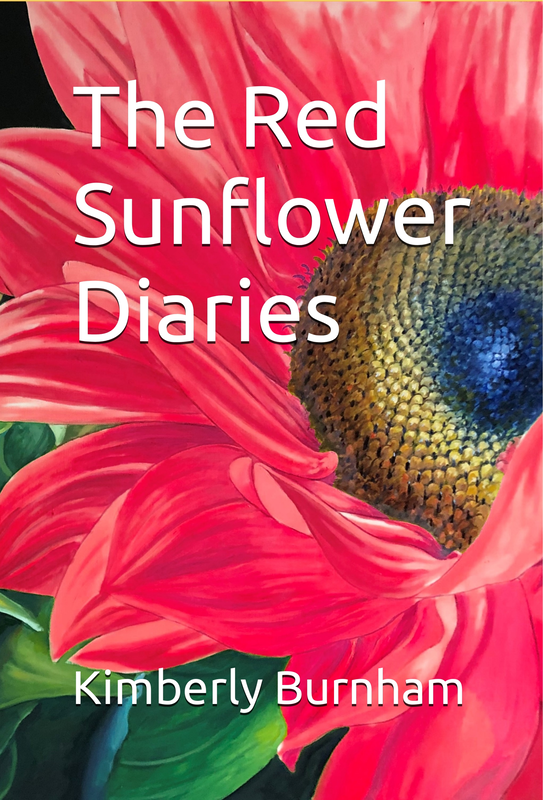

Kimberly Burnham, PhD (Integrative Medicine)
860-221-8510 phone and what's app. Skype: Kimberly Burnham (Spokane, Washington) [email protected] Author of Awakenings, Peace Dictionary, Language and the Mind, a Daily Brain Health and P as in Peace, Paix and Perdamiam: an Inner Peace Journal To Stimulate The Brain Kimberly Burnham, The Nerve Whisperer, Brain Health Expert, Professional Health Coach for people with Alzheimer's disease, Memory Issues, Parkinson's disease, Chronic Pain, Huntington's Ataxia, Multiple Sclerosis, Keratoconus, Macular Degeneration, Diabetic Neuropathy, Traumatic Brain Injuries, Spinal Cord Injuries, Brain Health Coaching ... Contact Kimberly Burnham in Spokane Washington (860) 221-8510 [email protected]. Chat with Kimberly about Parkinson's, Poetry or other Brain related issues.
Not Taking Advantage of Your Amazon Author's page?
Kimberly Burnham helps authors get their books out into the world more broadly by improving their free Amazon Author's page and book pages, posting a book review on her blog and on her LinkedIn Pulse blog (over 12,000 followers) Promotion packages start at $50. Contact her at [email protected]. See her Amazon Author's Page. See her list of publications including her latest book of brain health meditations, Awakenings: Peace Dictionary, Language and the Mind, a Daily Brain Health Program.  Look Inside on Amazon 
Now Available: AwakeningsPlease share and write a review on Amazon.
Poet-In-Residence Position
I am looking for guest blog opportunities and a position as poet-in-residence. My current project is writing dictionary poems using words in different languages for the English word "peace." You can read some of my poems on Poemhunter . As poet-in-residence I would write poems on different words in different languages and broadcast them throughout the social media blogosphere. Each poem would link back to your site where the word or language appeared. I would expect some sort of stipend and a six month to one year placement. Please contact me for details if your organization is interested in having a poet-in-residence to help get your message out. [email protected] 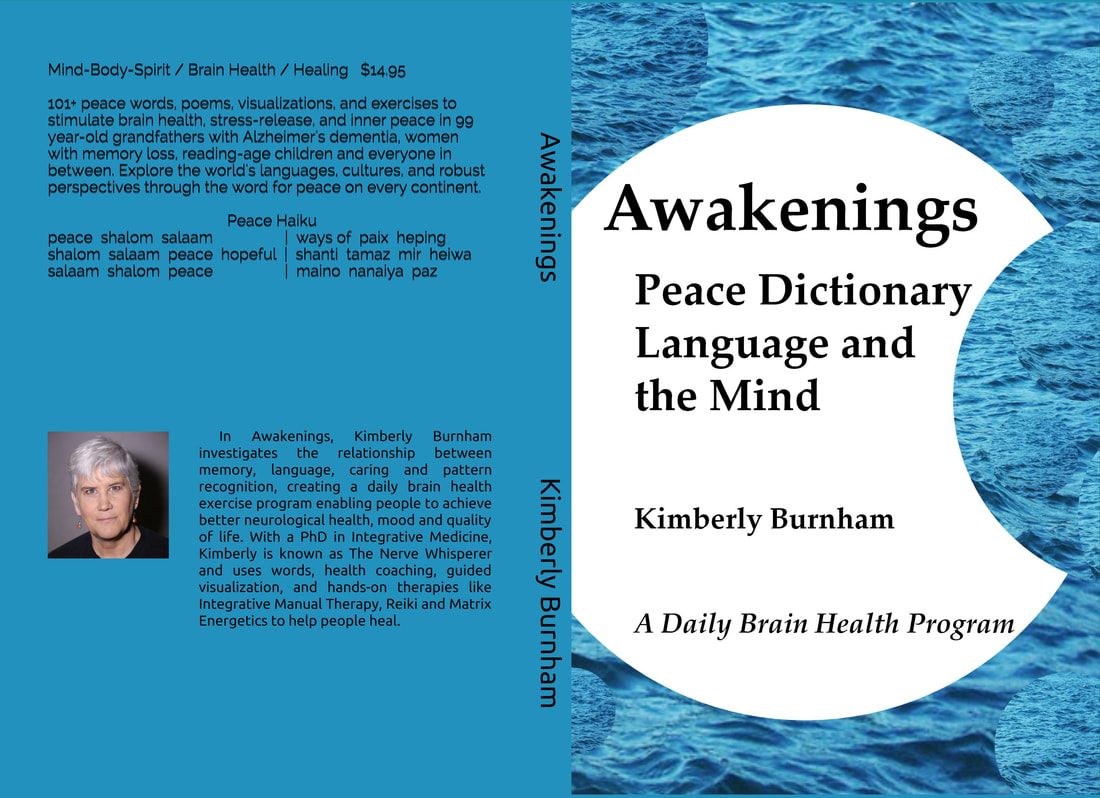
Buy the print or eBook, review Awakenings then contact Kimberly for a free 20 minute brain health consultation. Email or Phone
(Regular rates $120 per hour or 10 sessions for $650.) (Integrative Medicine)
|
|||||||||||||||||||||||||||||||||||||||


 https://orcid.org/0000-0001-5744-4735
 RSS Feed
